
Goripalayam Dargah is one of the largest and oldest dargahs in India and a prominent spiritual landmark in Madurai. Located along Azhagar Kovil Road, on the northern banks of the Vaigai River, the dargah attracts devotees and tourists throughout the year. Because of its deep-rooted history, it stands as a symbol of communal harmony and faith.
Saints & Sacred Tombs
Most importantly, the dargah houses the tombs of two revered saints of the Madurai Sultanate—Syed Sultan Alavudeen Howlia and Syed Sultan Shamsudeen Haulia. According to legend, these brothers arrived from Oman in the 13th century to spread the message of Allah. Furthermore, they cured the illness of King Sundara Pandian, after which the king granted them authority over nine villages.
Architecture & Unique Features
Interestingly, the dargah reflects Hindu architectural influences, with massive stone pillars and elegant design. In addition, the grand dome measures 20 feet in height and 70 feet in diameter, making it visually striking. Tamil inscriptions inside the mosque further highlight its cultural significance. The structure was later patronized by Thirumalai Nayak, adding to its historical value.
Devotee Beliefs & Visiting Hours
As a result of its spiritual power, devotees strongly believe that prayers offered here are fulfilled. Therefore, people from different regions visit the dargah to seek blessings. The dargah remains open daily from 5:00 AM to 8:00 PM, welcoming all faiths.
Nearby Tourist Attractions
Kazimar Big Mosque is one of the oldest and most revered Islamic landmarks in Tamil Nadu. Located very close to the Periyar Bus Stand and about one kilometre from the Madurai Railway Station, the mosque enjoys easy accessibility for devotees and visitors. Because of its central location, it remains an important spiritual and cultural site in the city.
Historical Significance
Kazimar Big Mosque dates back to the 13th century and stands as a testament to Madurai’s rich Islamic heritage. Hazrat Kazi Syed Tajuddin, a descendant of Prophet Mohammed who came from Oman, constructed the mosque on land granted by King Kulasekara Pandyan of the Pandyan dynasty. This historic association highlights the religious harmony that existed in Madurai even during ancient times.
Architecture and Spiritual Importance
The mosque is popularly known as Periya Pallivasal because of its large capacity, as it can accommodate nearly 2,500 worshippers at a time. Inside the mosque lies a sacred Maqbara (Dargah) belonging to the descendants of Prophet Mohammed, which adds immense spiritual value to the site. The serene atmosphere, simple yet elegant architectural elements, and devotional ambiance make it a peaceful place for prayer and reflection.
Timings and Visitor Information
Kazimar Big Mosque remains open on all days, including public holidays, from 7:00 AM to 8:00 PM. Devotees visit the mosque not only to offer prayers but also to experience a sense of calm and divine connection. Visitors are advised to dress modestly and maintain silence within the premises.
Nearby Tourist Attractions
First Baptist Church of Madurai is also a famous church in Madurai, that is located at S.S Colony, Madurai.
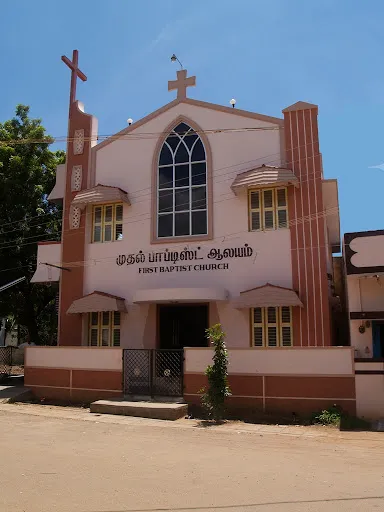
In the year 1974, one Mr. A. Victor, an employee of Indian Railways, along with other 8 ardent devotee of the Christ, started “The First Baptist Church” in a small room.
Then in the year 1985, Mr. James Garlow, a missionary at Silchar, gave some amount with the help of which a piece of land was bought. A church was constructed to spread the message of God via proper channel Today, it has three branches.
Nearby Tourist Attractions
St. Mary’s Cathedral Church ranks among the oldest churches in India and stands as a major spiritual landmark of Madurai.. Serving as the seat of the Roman Catholic Archdiocese of Madurai, the cathedral attracts devotees, tourists, and architecture enthusiasts throughout the year.
Architecture & Visual Grandeur
One of the church’s most striking features is its bell-shaped Roman-style twin towers, which rise to an impressive height of 140 feet. Because of their towering presence, visitors can spot the church from a considerable distance. The structure beautifully blends Roman, German, and European architectural styles, creating a visually captivating and serene atmosphere.
History & Expansion
Father Joseph Bertrand initiated the construction of the church in 1840 at Balarengapuram, near Thirumalai Nayakkar Street. Initially dedicated to Vyakula Matha, locals fondly referred to it as Vyakula Matha Kovil. As devotion grew, the church soon required expansion. Therefore, the Madurai Catholic Mission renovated the structure in 1870, adding the iconic towers. Later, in 1960, authorities further expanded the church and adopted a German architectural style to accommodate larger congregations.
Visiting Information
Today, St. Mary’s Cathedral Church remains open daily from 6:00 AM to 6:00 PM, offering a peaceful space for prayer, reflection, and admiration of its historic beauty.
Nearby Tourist Attractions
Vekkali Amman Temple is a prominent shrine dedicated to Goddess Kali and is located at Woraiyur, a suburban locality in Trichy. The temple uniquely faces the north, a direction traditionally associated with victory and success, which adds to its spiritual significance.
Historical and Local Significance
Residents of Woraiyur revere Goddess Vekkali Amman as their guardian deity and firmly believe that she protects the town from harm. According to tradition, the temple dates back to the Chola period. During those times, Chola rulers regularly visited this shrine to seek divine blessings before heading to the battlefield. As a result, the temple continues to hold strong historical importance alongside its religious value.
Unique Form of Goddess Vekkali Amman
The form of Goddess Vekkali Amman here stands out from other Kali temples. Notably, the foot of the Goddess rests on an asura, symbolizing protection for devotees and reflecting her immense power and energy. This distinctive posture emphasizes her role as a fierce yet compassionate protector.
Rituals and Festivals
The temple observes six major festivals every year, drawing devotees from across the region. In addition, priests perform seven daily rituals with great devotion, accompanied by traditional music and sacred chants. Consequently, the temple remains spiritually vibrant throughout the day, offering devotees a deeply divine experience.
Spiritual Experience
A visit to Vekkali Amman Temple allows devotees to witness intense spiritual energy and experience a sense of divine protection. Worshippers come here with faith and devotion to seek blessings from Goddess Kali. Therefore, anyone visiting Trichy should consider visiting this powerful temple to experience its sacred atmosphere and historical legacy.
Nearby Tourist Attractions
- Pachamalai Hills – Trichy
- Anna Science Center Planetarium – Trichy
- Government Museum – Trichy
- Kallanai Dam – Trichy
- Puliyancholai Falls – Trichy
- Mukkombu Dam – Trichy
- Butterfly Park – Trichy
- St.Mary’s Cathedral Church – Trichy
- Our Lady of Lourdes Church – Trichy
- erumbeeswarar Temple – Trichy
- Prasanna Venkatachalapathy Temple – Trichy
- Sri Ranganathaswamy Temple – Trichy
- Ucchi Pillaiyar Temple – Trichy
Arulmigu Madana Gopala Swamy Temple is a revered Vaishnavite shrine located on Melamasi Street in Madurai, close to the Periyar Bus Stand. The temple stands on the eastern side of Immayil Nanmai Tharuvar Temple, making it easily accessible for devotees.
Deities & Sacred Features
The presiding deity, Lord Madana Gopala Swamy, appears with Bama and Rukmini, while Goddess Madhuravalli Thayar has a separate shrine within the temple. Notably, the plantain tree serves as the temple’s sacred sthala vriksha, adding to its spiritual identity.
Divine Legend & Significance
According to legend, after marrying Goddess Meenakshi, Lord Shiva ruled Madurai as Sundara Pandiyan. However, intense penance caused his body to emit unbearable heat, threatening cosmic balance. Consequently, the devas sought Lord Vishnu’s help. Understanding that divine music could calm Shiva, Vishnu manifested as Madana Gopalan and played the flute. Instantly, Lord Shiva emerged from penance, restoring harmony. At Shiva’s request, Vishnu chose to reside in Madurai as Vishwaroopa Kanna under the Ashtanga Vimanam.
Beliefs & Devotion
Therefore, aspiring musicians visit this temple to seek blessings for artistic excellence. Additionally, tradition states that Andal and Periyazhwar worshipped here before Andal attained divine union.
Temple Timings
The temple welcomes devotees daily from 6:40 AM to 12:00 PM and 5:00 PM to 9:00 PM. Hence, devotees should not miss visiting this sacred shrine while in Madurai.
Nearby Tourist Attractions
Muktheeswarar Temple is an ancient Shiva temple located at Theppakulam, Meenakshi Nagar in Madurai.. Believed to be 1,000 to 2,000 years old, the temple holds immense historical and spiritual importance. Over the centuries, it has remained a sacred place where devotees seek peace, salvation, and divine grace.
Presiding Deities & Spiritual Significance
The main deity, Lord Shiva, is worshipped here as Muktheeswarar, while Goddess Parvati is revered as Maragathavalli. According to belief, Lord Surya (Sun God) worships Lord Shiva at this temple. As a result, there is no Navagraha shrine within the temple premises. Interestingly, sunrays fall directly on the Muktheeswarar deity from March 10 to 23 and September 18 to 30 every year, illuminating the idol for about 20 minutes daily, a rare and divine phenomenon.
Sacred Trees & Devotee Beliefs
Moreover, the temple houses four sacred Vilwa tree varieties—Nelli, Kiluvai, Mavilangai, and Vilwa. Devotees firmly believe that prayers offered here bring liberation (mukthi) and a fulfilled life.
Temple Timings
The temple is open from 6:00 AM to 11:00 AM and 4:00 PM to 8:00 PM. A visit here promises spiritual solace and divine blessings.
Nearby Tourist Attractions
Sri Veeraraghava Perumal Temple is situated on South Masi Street in Madurai, a city renowned for its rich spiritual heritage. Dating back to the 16th century AD, the temple was built during the reign of Chokkappa Naicker, making it one of the ancient Vishnu temples in the region.
Deity & Unique Forms of Lord Vishnu
The presiding deity is Lord Vishnu, worshipped as Sri Veeraraghava Perumal, along with Sridevi and Bhoodevi, while Goddess Lakshmi is revered as Kanakavalli. Notably, Lord Vishnu appears here in three distinct forms:
- Ranganathar in a sleeping posture
- Veeraraghava Perumal in a standing posture
- Yoga Narasimhar in a seated posture
Legends & Sacred Beliefs
According to legend, Thirumalai Nayakar discovered the idol of Veeraraghava Perumal in the waters of the Vaigai River at Mandiyur. Since then, it became a tradition for Kallazhagar to visit this temple on Chitra Pournami. Additionally, sage Manduka Maharishi attained salvation here after being freed from Durvasa Muni’s curse.
Timings & Devotee Beliefs
The temple remains open from 6:00 AM to 11:00 AM and 4:00 PM to 8:30 PM. Devotees strongly believe that prayers for marriage, childbirth, health, and salvation are fulfilled here, making it a powerful place of worship.
Image Attribution : Chitraveethikaaran
Meenakshi Amman Temple dates back to the 7th century and stands as one of the oldest and most iconic temples in Madurai. Over the centuries, the temple has evolved into a powerful symbol of devotion, culture, and architectural brilliance. Therefore, it continues to attract devotees, historians, and travelers from across the world.
Architectural Marvel – The Gopurams
Located on the banks of the Vaigai River, the temple complex features 14 magnificent gopurams, which form its most striking architectural highlight. Notably, these towering structures range between 45 and 50 metres in height. Among them, the southern gopuram stands tallest at about 170 feet. As a result, it dominates the skyline of Madurai and leaves a lasting impression on every visitor.
In the 16th century, King Vishwanatha Nayak reconstructed and expanded the temple, thereby enhancing its grandeur and scale. Consequently, the temple gained global recognition and was nominated among the New Seven Wonders of the World from a list of 30 nominees. Moreover, the temple houses nearly 33,000 intricately carved sculptures that reflect exceptional craftsmanship and artistic excellence. The presiding deity is Goddess Meenakshi, a form of Goddess Parvathi, which makes this temple unique among Shiva temples. Her consort, Lord Shiva, is worshipped here as Sundareswarar. According to mythology, Indra first recognized the sanctity of this sacred site. Furthermore, legends state that Goddess Parvathi promised Kanchanamalai, the wife of Malayadwaja Pandya, that she would be born as their daughter.
Legend of Goddess Meenakshi Amman
According to legend, Goddess Meenakshi was born with three breasts, and a divine voice foretold that the third breast would disappear when she met her destined husband. She was named Taadagai and mastered all 64 sastras. Gradually, she conquered the three worlds and later marched toward Shiva Loka during her coronation. However, when she encountered Lord Shiva, she felt shy and realized her true identity as Goddess Shakthi. Instantly, the third breast disappeared, fulfilling the prophecy.
Subsequently, Goddess Meenakshi married Lord Shiva on Earth in a grand celestial wedding. Devotees celebrate this divine union every year as Meenakshi Thirukalyanam, which forms a major highlight of the Madurai Chithirai Festival. After ruling as queen and king, the divine couple chose to reside in the temple to bless humanity.
The name “Meenakshi” means fish-eyed, derived from Meena (fish) and Akshi (eye). Therefore, the temple’s majestic gopurams symbolically invite devotees to behold the compassionate and ever-watchful gaze of Goddess Meenakshi.
Meenakshi Amman Temple Timings
The temple remains open daily from 4:30 AM to 12:30 PM. Later, it reopens at 3:30 PM and allows darshan until 9:30 PM. Hence, devotees have ample time throughout the day to participate in rituals and seek divine blessings.
Daily Rituals at Meenakshi Amman Temple
Priests perform several elaborate rituals every day with great devotion and precision. The day begins with Thiruvanandal Pooja in the early morning, followed by Vizha Pooja and Kalasanthi Pooja. Subsequently, the temple conducts Uchikala Pooja at noon. In the evening, devotees witness Sayaraksha Pooja and Arthajama Pooja, which conclude the day’s ceremonies. Notably, the symbolic procession of Lord Sundareswarar to Goddess Meenakshi’s sanctum at night represents their divine union and captivates devotees with its spiritual significance.
Major Festivals Celebrated
The temple celebrates several grand festivals throughout the year. Among them, the Chithirai Festival stands as the most important and attracts lakhs of devotees during April–May. This festival features the celestial wedding (Meenakshi Thirukalyanam) and the grand car procession. In addition, devotees celebrate Navaratri, Avani Moolam, Float Festival (Theppotsavam), and Maha Shivaratri with great enthusiasm. Consequently, these vibrant celebrations enhance the temple’s spiritual atmosphere and strengthen its cultural legacy.
Madurai Meenakshi Amman Temple – FAQ
Where is Madurai Meenakshi Amman Temple located?
Madurai Meenakshi Amman Temple is located in the heart of Madurai city, Tamil Nadu. It is one of the most iconic and ancient temples in India.
Who are the main deities of the temple?
The temple is dedicated to Goddess Meenakshi (a form of Parvati) and Lord Sundareswarar (a form of Lord Shiva), symbolizing divine marriage and cosmic balance.
What is the architectural significance of Meenakshi Temple?
The temple is renowned for its magnificent Dravidian architecture, towering gopurams adorned with thousands of colorful sculptures, and the famous Hall of Thousand Pillars.
What are the temple timings of Madurai Meenakshi Amman Temple?
The temple is generally open from early morning around 5:00 AM to 12:30 PM and from 4:00 PM to 9:30 PM. Timings may vary during festivals.
Which festival is most famous at Meenakshi Amman Temple?
The Chithirai Festival, celebrating the celestial wedding of Goddess Meenakshi and Lord Sundareswarar, is the most famous annual festival attracting lakhs of devotees.
Nearby Tourist Attractions
Just a short distance from the bustling city of Madurai, stands one of the most sacred shrines of Lord Murugan. Thirupparankundram Murugan Temple holds immense spiritual importance as the first holy abode of Lord Murugan in Tamil Nadu. Located at the base of the majestic Parankundram Hill, the temple beautifully blends devotion, legend, and ancient stone architecture. Moreover, as the First Arupadai Veedu, the temple attracts devotees, historians, and travelers from across the country.
Dating back to the 6th or 7th century, Thirupparankundram Murugan Temple ranks among the oldest temples in South India. Situated about 8 kilometres from Madurai, artisans carved the entire temple out of a single rock, showcasing the architectural excellence of the Pandya dynasty. The temple enshrines Lord Murugan as the main deity along with Lord Vishnu, Lord Shiva, Lord Ganesha, and Goddess Durga. Notably, this temple uniquely places the Vishnu shrine facing the Shiva shrine, a feature rarely seen elsewhere. Priests perform six daily rituals, preserving centuries-old traditions. Additionally, a sacred tank outside the temple allows devotees to offer aval and salt to the fish, which many consider auspicious. Therefore, a visit to Madurai feels truly incomplete without offering prayers at this renowned Murugan temple.
📜 The Legend: Where Murugan Married Deivanai
According to ancient Tamil puranas, Thirupparankundram Hill witnessed two major divine events that elevated its sacred status.
- The Victory: After defeating the demon Surapadman, Lord Murugan worshipped Lord Shiva at this sacred hill.
- The Divine Wedding: Following the victory, Lord Murugan married Devasena (Deivanai), the daughter of Lord Indra, at this very location.
As a result of this celestial wedding, devotees consider the temple highly auspicious for marriages. Consequently, people often refer to the hill as the “Southern Himalaya.”
Legend states that Surapadman received powerful boons from Lord Shiva and later ruled the 1008 lokas, troubling the devas. When he dishonored Indrani, Lord Indra sought help from Lord Murugan. Murugan defeated Surapadman at Thirupparankundram, split him into two halves, and transformed them into his divine vehicles—the peacock and the rooster.
After the victory, Lord Murugan worshipped Lord Shiva here as Parangirinathar. As a token of gratitude, Lord Indra offered his daughter Deivanai in marriage to Murugan. Hence, Kandha Shasti festival is celebrated during the Aippasi month at Murugan temples across Tamil Nadu.
Architecture: A Rock-Cut Marvel
The temple stands as a remarkable example of early Pandya architecture. Unlike many temples constructed above ground, artisans carved the main sanctum directly into the hill, giving the shrine its unique rock-cut identity.
Key architectural highlights include:
- The Rajagopuram: A majestic seven-tiered tower that welcomes devotees at the entrance.
- Spiritual Harmony: The shrines of Lord Shiva, Lord Vishnu, Lord Vinayaka, and Goddess Durga share the same rock-cut structure.
- The Mandapams: The Aasthaana Mandapam, Kambathadi Mandapam, Ardha Mandapam, and Maha Mandapam feature intricately carved pillars and detailed stone sculptures.
Temple Timings & Pooja Schedule
The temple follows a strict daily ritual schedule and remains open throughout the year.
- Morning: 05:30 AM to 01:00 PM
- Evening: 04:00 PM to 09:00 PM
However, on festival days such as Thaipusam and Panguni Uthiram, the temple opens earlier and closes later to accommodate the large number of devotees.
Visitor Tips: Dress Code & Temple Rules
To ensure a smooth and respectful darshan experience, visitors should follow these guidelines.
- Entry Fee: General darshan is free for all devotees, while special darshan tickets are available.
- Dress Code: Visitors should wear modest and traditional attire. Avoid shorts and sleeveless clothing.
- Mobile Phones: Temple authorities restrict photography and mobile phone usage inside the inner sanctum.
- The Climb: Walk slowly through the halls and admire the carvings, as the ascent symbolizes spiritual elevation.
Conclusion
Every carving, every step, and every beam of light at Thirupparankundram speaks of victory and union. The hill is not just a rock; it is the altar of Murugan’s promise, awaiting every pilgrim who enters with devotion.
Have you visited this sacred hill temple? Share your darshan experience in the comments below! If you found this guide helpful, don’t forget to share it with your friends and family planning a trip to Madurai.
[Plan Your Trip to Madurai? Read our Top 15 Places Guide Here]
Thirupparankundram Murugan Temple – FAQ
Where is Thirupparankundram Murugan Temple located?
Thirupparankundram Murugan Temple is located in Thirupparankundram, about 8 km from Madurai city in Tamil Nadu. It is one of the six sacred abodes (Arupadai Veedu) of Lord Murugan.
Why is Thirupparankundram called the First Arupadai Veedu?
Thirupparankundram is considered the first among the six Arupadai Veedu temples because it is the place where Lord Murugan married Deivanai after defeating the demon Surapadman.
What is unique about the architecture of the temple?
The temple is carved out of a rock hill and showcases ancient Pandya rock-cut architecture, featuring intricate sculptures and cave-style sanctums.
What are the temple timings of Thirupparankundram Murugan Temple?
The temple is generally open from around 5:30 AM to 1:00 PM and from 4:00 PM to 9:00 PM. Timings may vary during festivals and special poojas.
Which festivals are celebrated at Thirupparankundram Temple?
Major festivals include Skanda Sashti, Panguni Uthiram, and Thai Poosam, drawing thousands of devotees from across Tamil Nadu.