
Thanjavur Maratha Palace
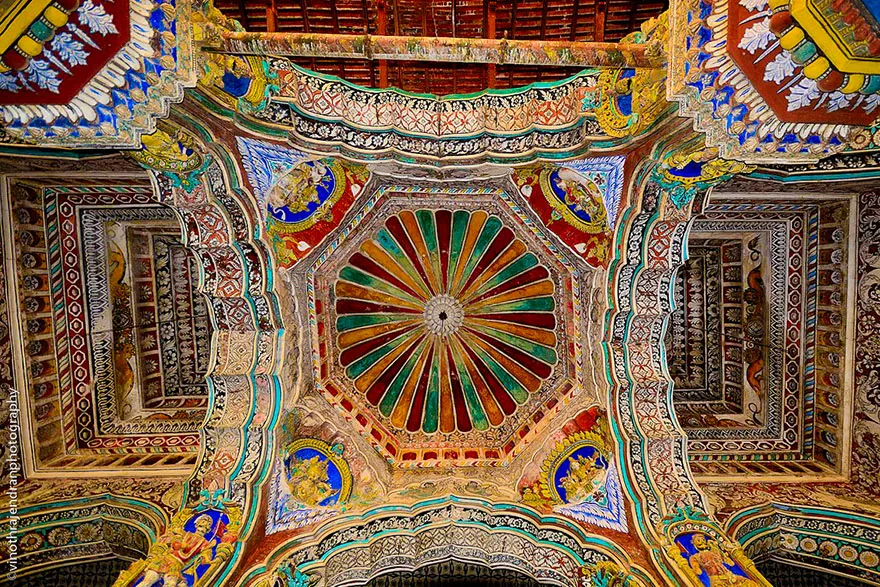
Located in the heart of Thanjavur town, the Thanjavur Maratha Palace stands as a remarkable symbol of Tamil Nadu’s royal heritage. Locally known as Aranmanai, the palace continues to serve as the residence of the Bhonsle family, who ruled Tanjore from 1674 to 1855. Although the Nayaks originally constructed the palace, the Marathas later took control after defeating them. Today, the Department of Archaeology safeguards several historically significant monuments within this vast palace complex.
History of Thanjavur Maratha Palace
The construction of the Thanjavur Palace began in 1534 under the rule of Sevappa Nayak and was completed a year later. Initially known as the Sivagangai Fort, the palace remained under Nayak administration until April 1674. Subsequently, the Maratha ruler Venkoji captured the fort and expanded the complex extensively.
Later, the Marathas continued to use the palace until 1799. Eventually, the British annexed the complex, marking the end of its role as a royal seat. Nevertheless, the palace still preserves layers of Nayak, Maratha, and colonial history.
Inside the Thanjavur Maratha Palace Complex
The palace complex is divided into eight prominent sections, each offering a unique historical experience. These include the Royal Palace Museum, Serfoji Memorial Hall, Durbar Hall, Saraswathi Mahal Library, Art Gallery, Bell Tower, Sangeet Mahal, and Sarjah Madi.
Once visitors pass through the main entrance, they reach the central ticket counter for entry and camera fees. However, separate ticket counters operate outside the Royal Palace Museum and Serfoji Memorial Hall.
Royal Palace Museum
The Royal Palace Museum forms the first section of the complex. Here, visitors can explore an impressive collection of royal headgear, weaponry, sculptures, and everyday objects once used by the Maratha rulers.
Maharaja Serfoji Memorial Hall
Located adjacent to the Palace Museum, this hall commemorates Maharaja Serfoji II, who ruled from 1798 to 1832. Moreover, the hall displays rare photographs, artefacts, and craft items that reflect his scholarly and cultural contributions.
Maratha Durbar Hall
The Maratha Durbar Hall once served as the royal court. Today, it houses the Tanjavur Art Gallery. In addition, the hall features a richly painted ceiling and walls adorned with portraits of Maratha rulers and deities such as Shiva, Vishnu, and Indra.
Saraswathi Mahal Library
Situated outside the palace complex, the Saraswathi Mahal Library ranks among the oldest libraries in India. Furthermore, it preserves over a million manuscripts written in Sanskrit, Tamil, Telugu, and Marathi, making it a treasure trove for scholars.
Art Gallery (Nayak Palace Courtyard / Arsenal Tower)
Originally built as the Nayak Palace, this section later transformed into an art gallery. Visitors can view statues, weapons, ancient coins, and artefacts while enjoying panoramic views of the spacious courtyard.
Koodagopuram / Arsenal Tower
The Koodagopuram, also known as the Arsenal Tower, rises 192 feet high with eight floors. Initially built by the Nayaks in 1645, the Marathas later expanded it in 1855. Historically, the tower served military purposes, including training, surveillance, and arms storage.
Maadamaaligai / Bell Tower
This rectangular structure, commonly called the Bell Tower, consists of seven floors. Earlier, a mechanical bell installed at the top rang every hour, allowing the tower to function as a timekeeper for the palace.
Sangeet Mahal
Sangeet Mahal is an indoor auditorium constructed by Sevappa Nayak in 1600. Notably, its acoustic design enhances musical clarity, making it an architectural marvel dedicated to performing arts.
Sarjah Madi (Sadar Madi)
Located near the main ticket counter, Sarjah Madi features five circular balconies of varying sizes. Consequently, it stands out as one of the palace’s most visually striking sections.
Intriguing Features of the Palace
- Originally designed as a fort, the palace features narrow staircases, sharp turns, and low ceilings to slow enemy movement.
- The complex reportedly contains at least three hidden chambers with secret doors, once used for confidential meetings and punishments.
- Two underground tunnels served as escape routes during wars. Notably, one tunnel allegedly connects the palace to the Brihadeeswarar Temple.
- The Chandramouleshwar Temple, built in 1589 by Achuthappa Nayak, remains the royal family’s private place of worship.
- The Arsenal Tower preserves a 92-foot skeleton of a Baleen Whale that washed ashore in 1955 at Tharangambadi Beach.
- Hourly audiovisual shows between 10:30 AM and 4:30 PM highlight the history and key attractions of Thanjavur.
Timings & Entry Fee
The Thanjavur Maratha Palace is open daily from 9:00 AM to 6:00 PM. However, it remains closed during lunch hours and on public holidays.
Entry Fee: ₹30 | Still Camera: ₹30 | Video Camera: ₹300
How to Reach Thanjavur Maratha Palace
Thanjavur enjoys excellent connectivity by road and rail. Regular bus services operate from major cities such as Hyderabad, Ernakulam, and Bangalore. Additionally, Thanjavur Junction serves as the nearest railway station, while Trichy International Airport is the closest airport.
Epilogue
Overall, the Thanjavur Maratha Palace offers visitors a deeply immersive historical experience. From ancient manuscripts and royal artefacts to grand halls and secret passages, the palace truly fascinates history enthusiasts. Therefore, with the help of local guides, visitors should explore every corner to fully appreciate this timeless architectural masterpiece.
Thanjavur Maratha Palace – FAQ
Where is Thanjavur Maratha Palace located?
Thanjavur Maratha Palace is located in Thanjavur city, Tamil Nadu, near the Brihadeeswarar Temple.
Who built the Thanjavur Maratha Palace?
The palace was originally built by the Nayak rulers in the 16th century and later expanded by the Maratha kings of Thanjavur.
What is Thanjavur Maratha Palace famous for?
The palace is famous for its Durbar Hall, Saraswathi Mahal Library, royal artifacts, murals, and historical manuscripts.
What can visitors see inside the palace complex?
Visitors can explore the Art Gallery, Royal Palace Museum, Bell Tower, Durbar Hall, and the renowned Saraswathi Mahal Library with rare palm-leaf manuscripts.
What is the best time to visit Thanjavur Maratha Palace?
The best time to visit is from October to March when the weather is pleasant for sightseeing in Thanjavur.