
The First Arupadai Veedu: A Complete Guide to Thirupparankundram Murugan Temple
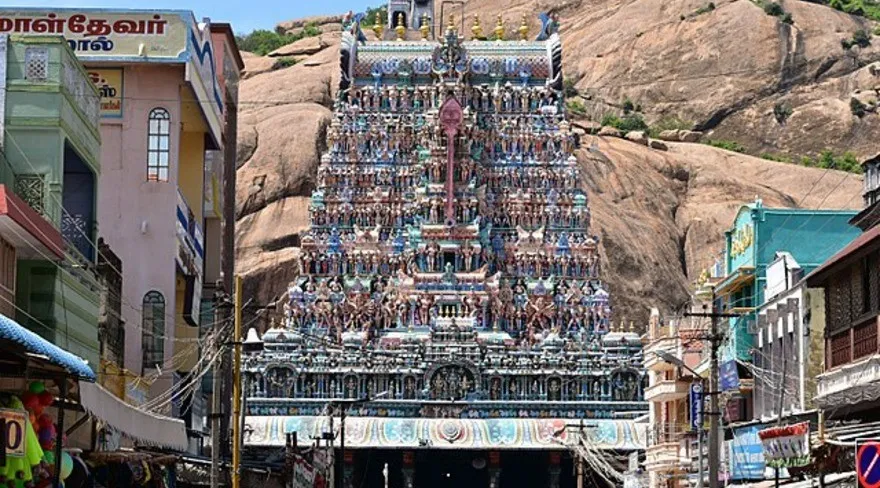
Just a short distance from the bustling city of Madurai, stands one of the most sacred shrines of Lord Murugan. Thirupparankundram Murugan Temple holds immense spiritual importance as the first holy abode of Lord Murugan in Tamil Nadu. Located at the base of the majestic Parankundram Hill, the temple beautifully blends devotion, legend, and ancient stone architecture. Moreover, as the First Arupadai Veedu, the temple attracts devotees, historians, and travelers from across the country.
Dating back to the 6th or 7th century, Thirupparankundram Murugan Temple ranks among the oldest temples in South India. Situated about 8 kilometres from Madurai, artisans carved the entire temple out of a single rock, showcasing the architectural excellence of the Pandya dynasty. The temple enshrines Lord Murugan as the main deity along with Lord Vishnu, Lord Shiva, Lord Ganesha, and Goddess Durga. Notably, this temple uniquely places the Vishnu shrine facing the Shiva shrine, a feature rarely seen elsewhere. Priests perform six daily rituals, preserving centuries-old traditions. Additionally, a sacred tank outside the temple allows devotees to offer aval and salt to the fish, which many consider auspicious. Therefore, a visit to Madurai feels truly incomplete without offering prayers at this renowned Murugan temple.
📜 The Legend: Where Murugan Married Deivanai
According to ancient Tamil puranas, Thirupparankundram Hill witnessed two major divine events that elevated its sacred status.
- The Victory: After defeating the demon Surapadman, Lord Murugan worshipped Lord Shiva at this sacred hill.
- The Divine Wedding: Following the victory, Lord Murugan married Devasena (Deivanai), the daughter of Lord Indra, at this very location.
As a result of this celestial wedding, devotees consider the temple highly auspicious for marriages. Consequently, people often refer to the hill as the “Southern Himalaya.”
Legend states that Surapadman received powerful boons from Lord Shiva and later ruled the 1008 lokas, troubling the devas. When he dishonored Indrani, Lord Indra sought help from Lord Murugan. Murugan defeated Surapadman at Thirupparankundram, split him into two halves, and transformed them into his divine vehicles—the peacock and the rooster.
After the victory, Lord Murugan worshipped Lord Shiva here as Parangirinathar. As a token of gratitude, Lord Indra offered his daughter Deivanai in marriage to Murugan. Hence, Kandha Shasti festival is celebrated during the Aippasi month at Murugan temples across Tamil Nadu.
Architecture: A Rock-Cut Marvel
The temple stands as a remarkable example of early Pandya architecture. Unlike many temples constructed above ground, artisans carved the main sanctum directly into the hill, giving the shrine its unique rock-cut identity.
Key architectural highlights include:
- The Rajagopuram: A majestic seven-tiered tower that welcomes devotees at the entrance.
- Spiritual Harmony: The shrines of Lord Shiva, Lord Vishnu, Lord Vinayaka, and Goddess Durga share the same rock-cut structure.
- The Mandapams: The Aasthaana Mandapam, Kambathadi Mandapam, Ardha Mandapam, and Maha Mandapam feature intricately carved pillars and detailed stone sculptures.
Temple Timings & Pooja Schedule
The temple follows a strict daily ritual schedule and remains open throughout the year.
- Morning: 05:30 AM to 01:00 PM
- Evening: 04:00 PM to 09:00 PM
However, on festival days such as Thaipusam and Panguni Uthiram, the temple opens earlier and closes later to accommodate the large number of devotees.
Visitor Tips: Dress Code & Temple Rules
To ensure a smooth and respectful darshan experience, visitors should follow these guidelines.
- Entry Fee: General darshan is free for all devotees, while special darshan tickets are available.
- Dress Code: Visitors should wear modest and traditional attire. Avoid shorts and sleeveless clothing.
- Mobile Phones: Temple authorities restrict photography and mobile phone usage inside the inner sanctum.
- The Climb: Walk slowly through the halls and admire the carvings, as the ascent symbolizes spiritual elevation.
Conclusion
Every carving, every step, and every beam of light at Thirupparankundram speaks of victory and union. The hill is not just a rock; it is the altar of Murugan’s promise, awaiting every pilgrim who enters with devotion.
Have you visited this sacred hill temple? Share your darshan experience in the comments below! If you found this guide helpful, don’t forget to share it with your friends and family planning a trip to Madurai.
[Plan Your Trip to Madurai? Read our Top 15 Places Guide Here]
Thirupparankundram Murugan Temple – FAQ
Where is Thirupparankundram Murugan Temple located?
Thirupparankundram Murugan Temple is located in Thirupparankundram, about 8 km from Madurai city in Tamil Nadu. It is one of the six sacred abodes (Arupadai Veedu) of Lord Murugan.
Why is Thirupparankundram called the First Arupadai Veedu?
Thirupparankundram is considered the first among the six Arupadai Veedu temples because it is the place where Lord Murugan married Deivanai after defeating the demon Surapadman.
What is unique about the architecture of the temple?
The temple is carved out of a rock hill and showcases ancient Pandya rock-cut architecture, featuring intricate sculptures and cave-style sanctums.
What are the temple timings of Thirupparankundram Murugan Temple?
The temple is generally open from around 5:30 AM to 1:00 PM and from 4:00 PM to 9:00 PM. Timings may vary during festivals and special poojas.
Which festivals are celebrated at Thirupparankundram Temple?
Major festivals include Skanda Sashti, Panguni Uthiram, and Thai Poosam, drawing thousands of devotees from across Tamil Nadu.