
Pongal Festival: Celebrating Harvest and Gratitude
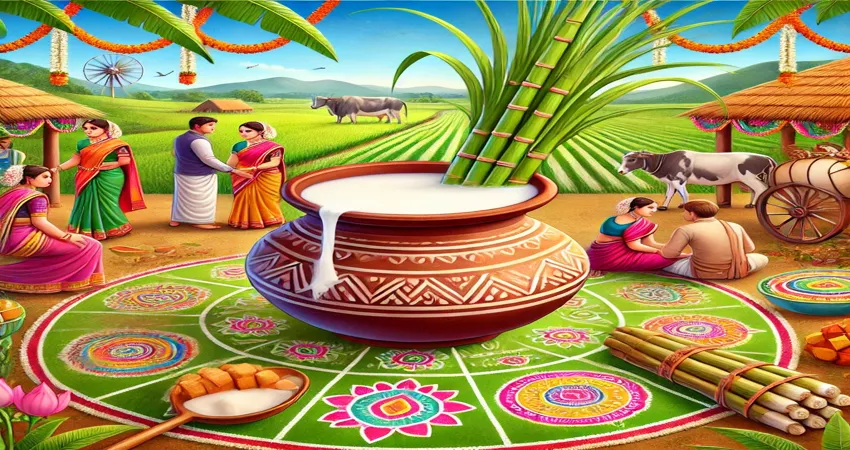
Pongal, also known as Thai Pongal, is a four-day harvest festival and one of the most important celebrations in South India, especially among Tamil communities. People dedicate this festival to the Sun God and express gratitude for the abundance of agricultural produce. Pongal takes place on the first day of the Tamil month Thai, which usually falls on January 14th or 15th each year. Moreover, people across India celebrate this harvest festival under different regional names. In Tamil Nadu, Pongal stands as the official Harvest Thanksgiving Festival, symbolizing prosperity, renewal, and gratitude.
Pongal – Tamilar Thirunal
The famous Tamil saying “Thai Pirandhal Vazhi Pirakkum” signifies that the arrival of the Tamil month Thai opens the door to new opportunities. Accordingly, people celebrate Pongal to mark the end of the South-East monsoon and the successful completion of the harvest season. As a result, this festival represents hope, abundance, and a fresh beginning for farming communities.
Etymology
The term “Thai Pongal” originates from the Tamil language. ‘Thai’ refers to the tenth month of the Tamil calendar, while ‘Pongal’ means to boil or to overflow. The word Pongal also denotes a traditional sweet dish prepared by boiling rice with milk and jaggery. Furthermore, the overflowing of the Pongal dish symbolizes prosperity, happiness, and abundance in Tamil households.
History of Pongal Festival
Historical inscriptions and temple records indicate that people celebrated Pongal as early as the Chola period. These records highlight the deep agricultural roots of the festival in Tamil culture. According to Hindu mythology, Lord Shiva once instructed Basava, the sacred bull, to visit Earth and advise humans to take an oil bath daily. However, Basava mistakenly conveyed the message as an instruction to eat daily instead. As a result, Lord Shiva asked humans to cultivate the land and grow food, thereby strengthening the festival’s association with agriculture and harvest.
The Significance of the Four Days: Bhogi, Thai Pongal, Mattu Pongal, and Kaanum Pongal
Pongal celebrations extend over four days, beginning with Bhogi Pongal, followed by Surya Pongal, Mattu Pongal, and concluding with Kaanum Pongal. Each day holds its own cultural and spiritual significance.
Bhogi Pongal
Bhogi Pongal marks the last day of the Tamil month Margazhi and signals the beginning of the Pongal festival. On this day, families clean and decorate their homes, discard old belongings, and wear new clothes. Additionally, people light bonfires, sing traditional songs, and perform dances around the fire. They also offer prayers to Lord Indra, the God of Rain, thanking him for past rains and seeking abundant rainfall in the coming year.
Thai Pongal or Surya Pongal
Thai Pongal, also known as Surya Pongal or Perum Pongal, marks the main day of the festival. It falls on the first day of the Tamil month Thai and coincides with Makara Sankranthi, which people celebrate across India. As the name suggests, this day honors the Sun God. Families prepare the traditional Pongal dish in earthen pots, create colorful kolams at their doorsteps, wear traditional attire, and celebrate with loved ones. Floral decorations and rituals further enhance the festive atmosphere.
Mattu Pongal
People celebrate Mattu Pongal on the day following Surya Pongal. The word ‘Mattu’ in Tamil refers to cattle such as cows and bullocks, which play a vital role in agriculture. On this day, families decorate cattle, feed them special meals, and worship them to express gratitude for their contribution to farming. Community games, cultural events, and local sports add joy and excitement to the celebrations.
Kaanum Pongal
Kaanum Pongal marks the conclusion of the Pongal festival. The Tamil word ‘Kaanum’ means to visit, and people spend this day meeting relatives and friends. Family outings, social gatherings, and community events form an important part of Kaanum Pongal, strengthening relationships and bringing the festivities to a joyful close.
Traditional Pongal Recipes You Must Try
A significant part of the Pongal festivities is the preparation of the sweet dish Pongal. Freshly harvested rice is boiled in milk and jaggery (raw cane sugar). Other ingredients that add to the taste are cardamom, raisins, cashew nuts, coconut and ghee. Cooking of Pongal is done in sunlight, usually near a temple or in a porch or courtyard at home, as the dish is a dedication to the Sun God. Pongal is cooked in a claypot which is decorated with flowers, leaves and Rangoli (kolam).
Pongal Festival Shopping
Get ready for the festive spirit of Pongal with an exciting shopping experience! Pongal, the harvest festival, is a time for joy, togetherness, and gratitude. From traditional attire to home decor, kitchen essentials to festive gifts, Pongal shopping is all about embracing the season’s traditions and trends.
Explore exclusive Pongal deals on sarees, dhotis, festive decorations, and delicious treats like sweets and savories. Don’t forget to shop for puja items to complete your festive preparations. Whether you’re buying for yourself, your family, or friends, find everything you need to make this Pongal extra special.
Epilogue
Pongal, more than just a festival symbolizes the celebration of life. It is the most cheerful way to start the year ahead on a thankful note. Pongal is all about embracing the goodness around us and having a gala time with friends and families.
Pongal Festival – FAQ
What is Pongal Festival and why is it celebrated?
Pongal is a four-day harvest festival celebrated in Tamil Nadu to thank the Sun God, nature, and farm animals for a bountiful harvest. It marks the beginning of the Tamil month Thai in mid-January.
What are the four days of Pongal?
The festival includes Bhogi, Thai Pongal, Mattu Pongal, and Kaanum Pongal. Each day has unique rituals such as discarding old items, cooking sweet Pongal, honoring cattle, and family gatherings.
How is Thai Pongal celebrated?
On Thai Pongal day, families cook a special dish called “Pongal” using newly harvested rice, milk, and jaggery. The dish is prepared outdoors as an offering to the Sun God Surya.
When is Pongal celebrated every year?
Pongal is celebrated from January 14 to January 17 each year, coinciding with the winter solstice and the harvest season in Tamil Nadu.
Is Pongal a public holiday in Tamil Nadu?
Yes, Pongal is a major public holiday in Tamil Nadu, with schools, colleges, and government offices closed during the festival period.