
Gingee Fort – Viluppuram
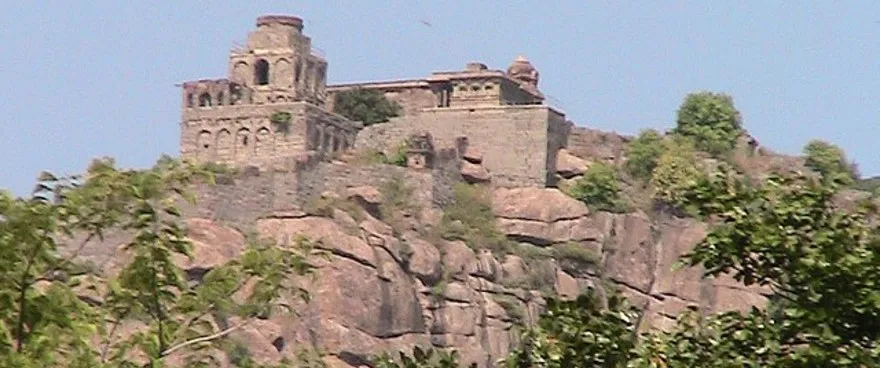
Overview & Location of Gingee Fort
Gingee Fort is located in the Villupuram District, close to the Union Territory of Puducherry and at a distance of about 160 kilometres from Chennai. It is also known by several names such as Senji, Jinji, Chenji, and Senchi Fort. Historically, the British referred to it as the “Troy of the East,” while the Maratha king Shivaji ranked it as the “most impregnable fortress in India.” At present, the Archaeological Survey of India administers and maintains the fort and, as a result, it continues to attract tourists throughout the year.
Image Attribute : Brownycat
The Gingee Fort – Etymology
- Initially, the Bijapur Nawabs, who held the fort from about 1660 to 1677 AD, called it Badshabad.
- Later, their successors, the Marathas, referred to it as Chandry or Chindy.
- Subsequently, the Mughals named it Nusratgadh after capturing the fort in 1698 AD.
- Eventually, the English and the French came to know it as Gingee or Jinji.
The Gingee Fort – Legend
The fort is closely associated with the tragic legend of Raja Tej Singh, popularly known as Thesingu Raasan. According to folklore, the young and courageous Tej Singh revolted against the Nawab of Arcot and lost his life in the war that followed. Even today, numerous ballads praise his bravery and commemorate his heroic yet tragic end.
History of Gingee Fort
Gingee Fort passed through the hands of several ruling dynasties of South India, beginning with the Cholas.
- Originally, Gingee served as a settlement for Jains.
- Subsequently, the Chola dynasty built the site of the small fort during the 9th century AD.
- Later, the Kurumbur rulers and the Vijayanagar Empire modified the fort during the 13th and 14th centuries.
- Meanwhile, under the Nayakka rulers, strong fort walls and temples on the plains were constructed using granite for nearly 150 years from the late 14th century.
- Taking advantage of frequent conflicts among the Nayakas of Gingee, Madurai, and Tanjore, the Bijapur Sultans captured the fort.
- Afterwards, the Marathas strengthened the fort under the leadership of Shivaji in 1677 AD.
- Thereafter, the Mughal General Zulfiqar Khan captured Gingee Fort.
- Eventually, the fort came under French and British rule. The indifference of foreign rulers towards its upkeep has left the fort as a historic memorial admired today.
Architecture of Gingee Fort
The massive structure of Gingee Fort stands at a highly strategic location, thereby making enemy entry extremely difficult. The fort complex spreads across three hillocks—Krishnagiri to the north, Chandrayandurg to the southeast, and Rajagiri to the west. Within the complex, visitors can explore the seven-storeyed Kalyana Mahal (marriage hall), ancient granaries, and a temple dedicated to the presiding deity Chenjiamman. Additionally, the fortification includes a sacred pond known as Aanaikulam.
The Gingee Fort – Timings & Traveller Tips
The fort remains open on all days from 9:00 AM to 4:30 PM. The entrance fee is Rs. 5 per person, Rs. 100 per head for foreign citizens, and free for children below 15 years of age. Therefore, visitors are advised to carry sufficient water, snacks, and protective gear such as caps or umbrellas to avoid the scorching heat. Moreover, visiting on weekdays helps avoid heavy crowds. Ideally, the best time to visit Gingee Fort is during the winter months from November to February. Trekking to the fort adds adventure to the trip, and at the same time, the exquisite interiors and scenic viewpoints offer excellent opportunities for photography while experiencing the fort’s historic grandeur.
How to reach Gingee Fort
The fort can be easily reached by taking a cab or private buses. The nearest railway station is at Tindivanam (around 31 kilometres away) and nearest airport is at Chennai (136 kilometres away).
Gingee Fort, Viluppuram – FAQ
Where is Gingee Fort located?
Gingee Fort is located in Gingee (Senji) town in Viluppuram district, Tamil Nadu, about 160 kilometers from Chennai.
Why is Gingee Fort famous?
Gingee Fort is famous for its massive hilltop fortifications, strategic military architecture, and historical importance. It is often called the “Troy of the East.”
Who built Gingee Fort?
The fort was originally built by the Chola dynasty and later expanded by the Vijayanagara rulers, Marathas, Mughals, and the British.
What are the main attractions inside Gingee Fort?
Main attractions include Rajagiri Fort, Krishnagiri Fort, Kalyana Mahal, granaries, temples, and panoramic viewpoints from the hilltops.
What is the best time to visit Gingee Fort?
The best time to visit is from November to February when the weather is cooler and suitable for trekking and exploring the fort.