
Bharatanatyam – India’s Classical Dance Gem
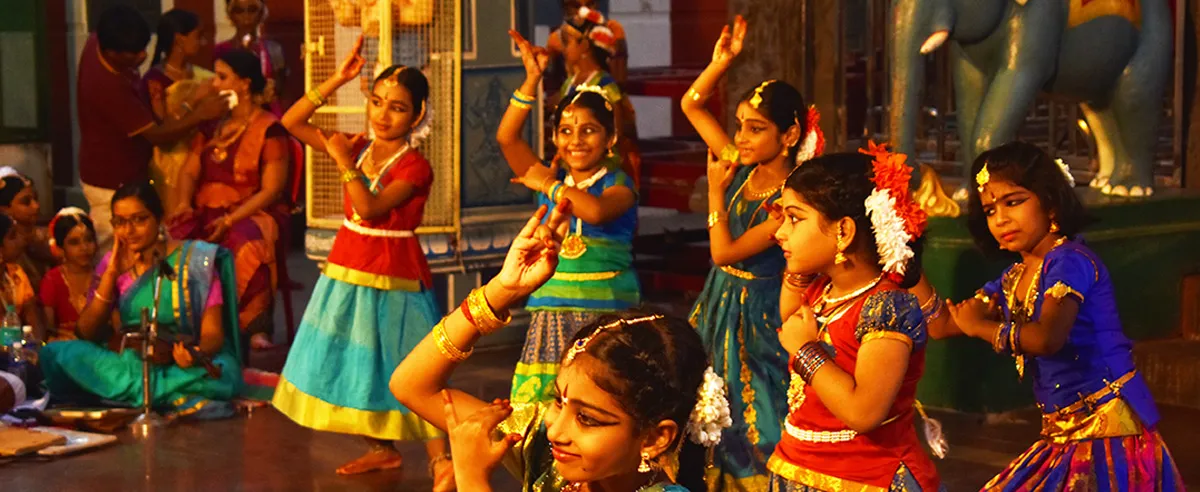
Bharatanatyam, a classical dance form that originated in the southern state of Tamil Nadu, stands as a meticulously structured and stylized art with a profound historical and cultural heritage. From the very beginning, this mesmerizing dance harmoniously blends grace, rhythm, storytelling, and spirituality, thereby creating a powerful artistic expression.
History of Bharatanatyam:
Bharatanatyam traces its origins to the temples of Tamil Nadu, where practitioners originally referred to it as “Dasi Attam” or “Sadir.” During this period, Devadasis—female temple dancers—performed the dance as an act of devotion while serving deities through music and movement. Consequently, Devadasis played a vital role in temple rituals and religious ceremonies.
Within temple spaces, dancers performed Bharatanatyam as a form of religious expression and storytelling. Through this art, they conveyed narratives from Hindu mythology, including epics such as the Ramayana and Mahabharata. As a result, devotees regarded the dance as a divine offering and a meaningful way to connect with the gods.
However, during the British colonial period in India, Devadasis encountered major social and cultural disruptions. British administrators and Christian missionaries viewed temple dance traditions with suspicion. Consequently, authorities suppressed these practices, pushing Bharatanatyam into obscurity and forcing the art form to undergo significant transformation.
Following India’s independence, Bharatanatyam experienced a powerful resurgence. Cultural institutions formally recognized it as one of India’s classical dance forms and provided renewed patronage. Moreover, dancers and gurus actively preserved its core traditions while simultaneously adapting the art to contemporary contexts.
Elements of Bharatanatyam:
Nritta : Nritta consists of intricate and rhythmic movements that emphasize the legs and feet. It focuses on physical technique and highlights the dancer’s mastery of adavus, precise footwork, and complex movement patterns.
Nritya: Nritya represents the expressive dimension of Bharatanatyam. Through facial expressions, hand gestures (mudras), and body movements, the dancer narrates stories and conveys emotions. Therefore, Abhinaya—the art of expression—plays a crucial role in Nritya.
Mudras: Mudras consist of intricate hand gestures, each carrying symbolic meaning. Bharatanatyam employs over fifty mudras to represent emotions, objects, and ideas. As a result, dancers undergo rigorous training to master these gestures for effective storytelling.
Abhinaya: Abhinaya focuses on emotional expression and demands the use of the eyes, face, and hands to interpret lyrics and sentiments. Therefore, dancers must deeply understand the narrative while establishing an emotional connection with the audience.
Rasa : In Bharatanatyam, rasa represents the emotional essence conveyed to the audience. Accordingly, dancers aim to evoke rasas such as love (shringara), valor (veera), and compassion (karuna), thereby creating a lasting emotional impact.
Bhava : Complementing rasa, bhava reflects the emotional state portrayed throughout the performance. Thus, bhava works in harmony with rasa to communicate subtle emotional nuances linked to the character or theme.
Natya: Natya encompasses the dramatic dimension of Bharatanatyam. It incorporates theatrical elements such as character portrayal and narrative enactment. Consequently, dancers often assume multiple roles within a single performance.
Costume and Makeup: Traditional Bharatanatyam costumes include vibrant silk saris for women and dhotis for men. Additionally, dancers wear ornate jewelry and anklets with bells. Elaborate makeup further enhances facial expressions and stage visibility.
Music and Instruments: Bharatanatyam performances rely heavily on classical Carnatic music. Vocalists and instruments such as the mridangam, violin, flute, and veena together establish rhythm and melody, thereby guiding the dancer’s movements.
Stage and Lighting: Performances typically take place on well-lit stages that highlight expressions and movement. Moreover, thoughtful lighting design creates a visually engaging and emotionally evocative atmosphere.
Choreography: Bharatanatyam choreography carefully arranges movements, compositions, and storytelling elements. As a result, choreographers ensure a balanced, harmonious, and aesthetically pleasing presentation.
Global Appeal:
Over time, Bharatanatyam has gained widespread international recognition. Dance schools across the world now offer training, and artists frequently perform at global cultural festivals. Furthermore, dancers from diverse cultural backgrounds increasingly collaborate with Indian practitioners, thereby creating innovative and cross-cultural interpretations.
Epilogue:
Overall, Bharatanatyam weaves together tradition, spirituality, and artistic excellence into a sublime dance form. Its expressive gestures, intricate movements, and storytelling captivate audiences worldwide. From its sacred temple origins to its revival after colonial challenges, Bharatanatyam continues to transcend boundaries and inspire generations. Ultimately, this classical dance stands as a timeless testament to the unifying and transformative power of art.
Bharatanatyam – FAQ
What is Bharatanatyam?
Bharatanatyam is one of the oldest classical dance forms of India, originating in Tamil Nadu. It combines expressive storytelling (abhinaya), rhythmic footwork, and intricate hand gestures (mudras).
What does the name Bharatanatyam mean?
The name Bharatanatyam is derived from “Bhava” (expression), “Raga” (music), “Tala” (rhythm), and “Natyam” (dance), reflecting its artistic elements.
Where did Bharatanatyam originate?
Bharatanatyam originated in the temples of Tamil Nadu and was traditionally performed by Devadasis as part of temple rituals and cultural traditions.
What are the key elements of a Bharatanatyam performance?
A typical Bharatanatyam performance includes Alarippu, Jatiswaram, Varnam, Padam, and Thillana, showcasing both technical skill and expressive storytelling.
Why is Bharatanatyam considered special?
Bharatanatyam is admired for its graceful movements, spiritual depth, and precise rhythm, making it a globally recognized symbol of India’s rich cultural heritage.