
Ranganathan Swamy temple is located at Karamadai, Coimbatore on the Coimbatore-Mettupalayam highway about (23kms) and is about 2000 years old temple.
Also known as Aranganathar Swamy, the main deity here is Lord Vishnu in the name of Ranganathar and Goddess Lakshmi is in name of Ranganayaki.
It is believed that decades back, a man from the thottiyyar’s tribe followed a cow to the woods that refused to give milk for a few days.
The cow was seen shedding its milk on a stone. In a fit of rage, the man struck the stone with a cane and blood started oozing out. Then, as per the Asariri (Godly Voice), a temple was erected there.
Nearby Tourist Attractions
- Velliangiri Hills – Coimbatore
- Prozone Mall – Coimbatore
- Fun Republic Mall – Coimbatore
- Brookfields Mall – Coimbatore
- The District Central Library – Coimbatore
- Race Course Park – Coimbatore
- VOC Park and Zoo – Coimbatore
- TNAU Botanical Garden – Coimbatore
- Vaidehi Falls – Coimbatore
- Monkey Fallss – Pollachi
- Siruvani Falls – Coimbatore
- Kovai Kuttralam Falls – Coimbatore
- Maharaja World – Coimbatore
- Kovai Kondattam – Coimbatore
- Black Thunder – Coimbatore
- Naga Sai Temple – Coimbatore
- Ashtamsa Sri Varada Anjaneya Temple – Coimbatore
- Eachanari Vinayagar Temple – Coimbatore
- Perur Pateeswarar Temple – Coimbatore
- Marudhamalai Murugan Temple – Coimbatore
- Top Slip Parambikulam Tiger Reserve – Pollachi
The Ashtamsa Sri Varada Anjaneya Temple is located at Peelamedu in Coimbatore, along Avinashi Road. Dating back nearly 500 years, the temple stands as a highly revered place of worship, known for its divine power and unique spiritual significance.
Here, Lord Anjaneyar, also known as Hanuman, presides as the main deity and is widely regarded as a powerful and benevolent God. Notably, Goddess Lakshmi resides on his palm, symbolising prosperity and assuring wealth to devoted worshippers.
Furthermore, Anjaneya faces the west, which signifies the assurance of good health and relief from diseases. At the same time, his legs point towards the south, symbolising the removal of fear related to death. Meanwhile, his tail extends fully towards the north, representing Kubera, the God of wealth, and thereby blessing devotees with prosperity.
The idol is carved from sacred Salagrama stone, adding to its spiritual importance. In addition, devotees can witness the deity in different divine avatars on a daily basis. As a result, the temple fulfils various spiritual needs, making it a place where devotees seek health, wealth, courage, and peace.
Open on all days, the Ashtamsa Sri Varada Anjaneya Temple offers unwavering faith and hope. Ultimately, devotees believe that sincere prayers here help Lord Anjaneya remove obstacles and problems from their lives.
Nearby Tourist Attractions
- Velliangiri Hills – Coimbatore
- Prozone Mall – Coimbatore
- Fun Republic Mall – Coimbatore
- Brookfields Mall – Coimbatore
- The District Central Library – Coimbatore
- Race Course Park – Coimbatore
- VOC Park and Zoo – Coimbatore
- TNAU Botanical Garden – Coimbatore
- Vaidehi Falls – Coimbatore
- Monkey Fallss – Pollachi
- Siruvani Falls – Coimbatore
- Kovai Kuttralam Falls –
Overview of Eachanari Vinayagar Temple
Eachanari Vinayagar Temple is primarily dedicated to Lord Ganesha, the first and foremost deity of the Hindu faith. Devotees worship Lord Ganesha here as the remover of obstacles and the harbinger of prosperity and wisdom.
Location of Eachanari Vinayagar Temple
The temple is located at Eachanari, about 12 kilometres from Coimbatore, along the Pollachi Highway Road. Owing to its strategic location, the temple is easily accessible for devotees and travellers.
Legend and History of the Temple
According to temple legend, devotees originally planned to transport the idol of Lord Ganesha from Madurai to the Perur Pateeswarar Temple. However, during the journey, the vehicle carrying the deity broke down at Eachanari. Interpreting this incident as a divine sign, devotees decided that Lord Ganesha wished to remain there.
As a result, they constructed a temple at Eachanari and established Lord Ganesha as the presiding deity. Over time, the temple emerged as one of the most ancient and revered temples in the Coimbatore region.
Unique Features of Eachanari Vinayagar Temple
The idol of Lord Ganesha at Eachanari Vinayagar Temple stands impressively tall at about 6 feet and measures nearly 3 feet in diameter. This majestic form adds to the temple’s spiritual and visual appeal.
Furthermore, the temple maintains an official website that provides exclusive information about daily rituals, special poojas, and donation facilities, making it convenient for devotees worldwide.
Social Services and Darshan Details
In addition to spiritual activities, the temple actively engages in social service. Notably, the temple conducts free marriages for financially underprivileged families, reflecting its commitment to community welfare.
The temple remains open on all days of the week, and devotees can enjoy free darshan without any entry fee, making it a welcoming spiritual destination for everyone.
Nearby Tourist Attractions
- Velliangiri Hills – Coimbatore
- Prozone Mall – Coimbatore
- Fun Republic Mall – Coimbatore
- Brookfields Mall – Coimbatore
- The District Central Library – Coimbatore
- Race Course Park – Coimbatore
- VOC Park and Zoo – Coimbatore
- TNAU Botanical Garden – Coimbatore
- Vaidehi Falls – Coimbatore
- Monkey Fallss – Pollachi
- Siruvani Falls – Coimbatore
- Kovai Kuttralam Falls – Coimbatore
Perur Pateeswarar Temple is also known as the Perur Pateeswarar Temple since the Deity here is known by the name Pateeswarar.
Located at Perur, towards the west of Noyyal river, it was built centuries back by Karikala Cholan..
Known for its architectural beauty, the Lord in this temple was patronized by Arunagirinathar and Kachiappa Munivar.
Here, the deities are known as Pateeswarar and Pachai Nayaki. Inside the temple, you can see the Golden Idol of Natarajar and figures of the Indian soldiers have been inscribed.
It is open on all the days of the week and darshan is free of cost. The temple is for sure divinity personified and most importantly, Lord Siva is said to be self-emerged (Swayambu).
Nearby Tourist Attractions
- Velliangiri Hills – Coimbatore
- Prozone Mall – Coimbatore
- Fun Republic Mall – Coimbatore
- Brookfields Mall – Coimbatore
- The District Central Library – Coimbatore
- Race Course Park – Coimbatore
- VOC Park and Zoo – Coimbatore
- TNAU Botanical Garden – Coimbatore
- Vaidehi Falls – Coimbatore
- Monkey Fallss – Pollachi
- Siruvani Falls – Coimbatore
- Kovai Kuttralam Falls – Coimbatore
- Maharaja World – Coimbatore
- Kovai Kondattam – Coimbatore
Introduction to Marudhamalai Murugan Temple
Located in the scenic foothills of the Western Ghats, around 15 km northwest of Coimbatore city, the sacred Marudhamalai Hill is home to the renowned Arulmigu Subramaniya Swamy Temple. Dedicated to Lord Murugan, the temple serves not only as a prominent spiritual destination but also as a centre of natural beauty, medicinal herbs, and ancient Tamil traditions. Rising approximately 500 feet above ground level, Marudhamalai is often revered as the seventh abode of Lord Muruga and is admired for its divine vibrations and breathtaking mountain views.
History and Legend of Marudhamalai Murugan Temple
The origins of the Marudhamalai Murugan Temple date back to the 12th century. However, its spiritual importance finds mention in much older Tamil devotional literature. The hill derives its name from the abundant “Marudham” trees that once flourished on its slopes. According to legend, Lord Murugan appeared here to bless the revered Siddhar Pambatti, a saint celebrated for his mystical powers and unwavering devotion.
Even today, the Paambaatti Siddhar Cave, located near the temple, stands as living evidence of this sacred association. Moreover, the nearby Maruda Theertham spring is believed to possess medicinal qualities, while the herbal vegetation on the hill has long supported traditional Ayurvedic practices.
Architecture and Unique Features of the Temple
The temple architecture beautifully blends traditional Dravidian design with the natural contours of the hill. Devotees can reach the main sanctum either by climbing around 700 steps or by driving along the hill road. The principal deity, Lord Murugan, is enshrined along with his consorts Valli and Deivanai.
One of the most distinctive features of the temple is the six-pointed mandapa, which symbolises balance and cosmic harmony. Inside the sanctum, the sacred Vel stands over six feet tall and bears engravings representing the Pancha Bhootas — earth, water, fire, air, and space.
At the foothills, devotees can also visit the Thaan Thondri Vinayakar Temple, dedicated to Lord Ganesha and believed to have self-manifested at this sacred spot.
Daily Rituals and Temple Timings
The Marudhamalai Murugan Temple opens early at 5:30 AM and remains accessible until 8:30 PM, with a short closure during midday hours. Devotees consider the early morning poojas and evening darshan especially auspicious due to the heightened spiritual energy during these times.
At dawn, mist drifts across the hilltops, temple drums echo through the valley, and peacocks often appear near the temple grounds, creating a deeply divine atmosphere. Visitors are advised to dress modestly and avoid using mobile phones inside the inner sanctum.
Festivals and Celebrations at Marudhamalai Murugan Temple
Marudhamalai Murugan Temple comes alive during its vibrant festivals, drawing devotees from across Tamil Nadu.
-
Thai Poosam – The most prominent festival, during which thousands of devotees carry
kavadi and perform milk abhishegam in devotion to Lord Murugan. - Karthigai Deepam – The hill glows with rows of oil lamps, symbolising divine light and spiritual purity.
- Monthly Kiruthigai – Special poojas and archanais are conducted every month on the Krittika star day, attracting local devotees.
Together, these celebrations reflect the deep-rooted Murugan devotion that defines the cultural and spiritual fabric of Tamil Nadu.
How to Reach Marudhamalai Murugan Temple, Coimbatore
The temple is conveniently located just a 30-minute drive from Coimbatore city centre.
- By Bus: Regular bus services operate from Gandhipuram and Ukkadam bus stands to the temple base.
- By Car: Parking facilities are available at the foothills. From there, visitors can take a mini-bus or climb the hill steps.
- By Train/Air: Coimbatore railway station and airport serve as the nearest major transit points.
Marudhamalai Murugan Temple Travel Tips & Visitor Guide
- Best time to visit: October to March, when the weather remains pleasant and skies stay clear.
- Carry: Drinking water, light snacks, and a cap or hat for daytime visits.
- Avoid: Peak festival hours if you prefer a peaceful darshan.
- Photography: Permitted in most areas except the inner sanctum.
Conclusion
Marudhamalai Murugan Temple is far more than a place of worship; it is a harmonious blend of nature, devotion, and ancient tradition. Whether visitors arrive seeking divine blessings, mental peace, or a refreshing hill climb, this sacred hill near Coimbatore offers a deeply enriching experience.
As the cool hill breeze brushes past and temple bells resonate through the valley, devotees truly understand why Marudhamalai continues to draw hearts back time and again — to experience its enduring divine energy.
Marudhamalai Murugan Temple – FAQ
Where is Marudhamalai Murugan Temple located?
Marudhamalai Murugan Temple is located on Marudhamalai Hill, about 12 km from Coimbatore city in Tamil Nadu. The temple sits amidst the scenic Western Ghats.
Which deity is worshipped at Marudhamalai Temple?
The temple is dedicated to Lord Murugan, worshipped here as Dhandayuthapani. It is one of the prominent Murugan temples in Tamil Nadu.
How can devotees reach Marudhamalai Temple?
Devotees can reach the temple by climbing steps or using temple-operated buses from the foothills. Road access is also available up to the hilltop.
What are the temple timings of Marudhamalai Murugan Temple?
The temple is generally open from around 5:30 AM to 1:00 PM and from 4:00 PM to 8:30 PM. Timings may vary during festival days.
Which festivals are celebrated at Marudhamalai Temple?
Major festivals include Thaipusam, Skanda Sashti, Panguni Uthiram, and Karthigai Deepam, attracting thousands of devotees.
Nearby Tourist Attractions
- Velliangiri Hills – Coimbatore
- Prozone Mall – Coimbatore
- Fun Republic Mall – Coimbatore
- Brookfields Mall – Coimbatore
- The District Central Library – Coimbatore
- Race Course Park – Coimbatore
- VOC Park and Zoo – Coimbatore
- TNAU Botanical Garden – Coimbatore
- Vaidehi Falls – Coimbatore
- Monkey Fallss – Pollachi
- Siruvani Falls – Coimbatore
- Kovai Kuttralam Falls – Coimbatore
The Mahabalipuram Shore Temple, built between 700 and 728 AD during the reign of Narasimhavarman II, stands as one of the oldest structural stone temples in South India. Located in Mamallapuram (Mahabalipuram), the temple majestically overlooks the shores of the Bay of Bengal and, therefore, earns the name “Shore Temple.” This sacred complex consists of temples and shrines constructed using granite blocks that date back to the 8th century AD.
Moreover, the monuments and temples of Mahabalipuram, including the iconic Shore Temple complex, were collectively recognized as a UNESCO World Heritage Site in 1984, highlighting their outstanding universal value.
History of Mahabalipuram Shore Temple
Mamallapuram, also known as Mahabalipuram, earned the nickname “Seven Pagodas” when early European explorers arrived at its shores. According to legend, six additional temples once stood alongside the Shore Temple, forming a magnificent coastal ensemble.
King Narasimhavarman II of the Pallava dynasty receives credit for the architectural brilliance of the Shore Temple as a structural temple complex. Later, after the Cholas took control of Mahabalipuram from the Pallavas, they added certain architectural elements to the existing structure.
Furthermore, in December 2004, the devastating tsunami that struck the Coromandel Coast revealed the remains of a collapsed ancient temple and several rock sculptures from the Pallava period. As a result, historians inferred that this complex formed part of a larger group of temples that once existed along the now-submerged coastline. Although the tsunami caused some damage, only a portion of the Shore Temple suffered structural impact.
Legend Behind the Shore Temple
Mythology links the Shore Temple to the legendary tale of Prahalada and his father, King Hiranyakashipu. Prahalada remained a devoted follower of Lord Vishnu, despite his father’s arrogance and defiance. Eventually, the Lord destroyed the tyrant king for his transgressions. According to legend, Prahalada’s son, King Bali, founded Mahabalipuram at this very location.
Additionally, another legend suggests that the gods themselves caused floods to submerge part of the city and its temples, as they grew envious of the site’s extraordinary architectural beauty.
Architecture of the Mahabalipuram Shore Temple
The Shore Temple complex comprises three temples built on a single elevated platform. The main shrine, dedicated to Lord Shiva in Lingam form, faces east and rises as a five-storeyed structure crafted from sculpted granite stones.
Furthermore, the complex includes three shrines: two dedicated to Lord Shiva and a third shrine devoted to Lord Vishnu in a reclining posture. Devotees enter the temple through a western gateway that leads through a simple barrel-vaulted gopuram.
Other Prominent Features of the Shore Temple
- The sanctum sanctorum houses Lord Shiva within a small mandapam and is enclosed by a thick outer wall, leaving a narrow passage for circumambulation.
- Additional shrines within the complex honor Ksatriyasimmesvara, Lord Vishnu, and Goddess Durga.
- Similar to the Vishnu shrine, the inner and outer walls of the Shiva shrines display rich cultural and mythological carvings.
- The shikaras of the two Shiva temples feature an octagonal design and reflect classic Dravidian architectural style.
- The inner walls of the east-facing Ksatriyasimhesvara shrine showcase the Dharalinga and Somaskanda panel.
- The outer walls display artistic carvings sculpted from boulders, which have gradually weathered due to constant exposure to wind and sea air.
- A row of sculpted bulls representing Nandi, the sacred vehicle of Lord Shiva, lines the entrance wall.
- The Shore Temple forms the scenic backdrop for the annual Mahabalipuram Dance Festival held during January and February.
- The temple captures the first rays of the rising sun and once served as a navigational landmark for ships along the coast.
- Although regular worship no longer takes place, visitors occasionally offer flowers and prayers at the shrines.
- The Archaeological Survey of India currently preserves and conserves the entire temple complex.
Significance of the Mahabalipuram Shore Temple
The Shore Temple marks a crucial transition from rock-cut architecture to free-standing structural temples. Consequently, it stands as a fine example of Dravidian architectural evolution. Additionally, the temple’s significance lies in its religious harmony, as it enshrines both Lord Shiva and Lord Vishnu within the same sacred complex.
How to Reach Mahabalipuram
Mahabalipuram, located in Chengalpattu district, enjoys excellent road connectivity with major cities across Tamil Nadu. The nearest airport is situated in Chennai, approximately 55 kilometers away.
Epilogue
The Shore Temple offers an ideal destination for travelers who admire art, architecture, and history. Therefore, while visiting Mahabalipuram, take time to absorb the timeless beauty of the Shore Temple set against the vast expanse of the sea.
Mahabalipuram Related Articles
How to reach Mahabalipuram?
Mahabalipuram Shore Temple – FAQ
Where is the Mahabalipuram Shore Temple located?
The Shore Temple is located in Mahabalipuram (Mamallapuram), Tamil Nadu, along the Bay of Bengal coast. It is one of the most iconic monuments in the region.
Who built the Shore Temple?
The Shore Temple was built during the 8th century by the Pallava king Narasimhavarman II (Rajasimha). It is one of the earliest structural stone temples in South India.
What is the architectural significance of the Shore Temple?
The temple showcases early Dravidian architecture and is part of the UNESCO World Heritage Site group of monuments at Mahabalipuram.
Which deities are worshipped in the Shore Temple?
The temple complex is primarily dedicated to Lord Shiva, with shrines for Lord Vishnu and other deities within the premises.
What are the visiting hours and entry fee for the Shore Temple?
The Shore Temple is generally open from sunrise to sunset. An entry fee is applicable for visitors, and tickets can be purchased at the site.
Nearby Tourist Attractions
Madras Crocodile Bank Trust is located about 40 km south of Chennai , along the scenic East Coast Road. Commonly known as the Crocodile Park, this unique conservation centre attracts wildlife enthusiasts, families, and students throughout the year. As you travel away from the city’s bustle, the surroundings gradually turn greener and calmer, setting the perfect mood for a nature-based experience.
A Unique Reptile Conservation Centre
Most importantly, the Madras Crocodile Bank Trust serves as a dedicated sanctuary for reptiles, making it one of the most fascinating wildlife attractions near Chennai. Visitors can observe various species of crocodiles, alligators, and other reptiles in well-maintained enclosures. Moreover, the park plays a vital role in reptile conservation, research, and education, helping to protect endangered species and spread awareness among the public.
An Educational & Memorable Experience
In addition to sightseeing, the park offers an excellent learning experience for curious minds. Informative displays and guided explanations help visitors understand reptile behaviour, habitats, and conservation efforts. Therefore, a visit here is not only exciting but also deeply educational.
Visitor Information
For accurate timings, tickets, and updates, visitors can check the official website of Madras Crocodile Bank Trust before planning their trip. Overall, it is a must-visit destination for wildlife lovers exploring Chennai and its surroundings.
Image Attribute : Andy Hay
Nearby Tourist Attractions
Muttukadu Lake, also called Muthukadu Backwaters, is a vast freshwater lagoon stretching along the East Coast Road near Chennai, running parallel to the Bay of Bengal. Formed by the backwaters of the sea, this scenic waterbody plays an important role in supporting the local ecosystem.
Moreover, the lake is surrounded by gently swaying coconut palms, dense mangrove forests, and thriving aquatic vegetation. Together, these natural elements create a peaceful and visually captivating landscape that attracts nature lovers throughout the year.
Water Sports at Muttukadu Boat House
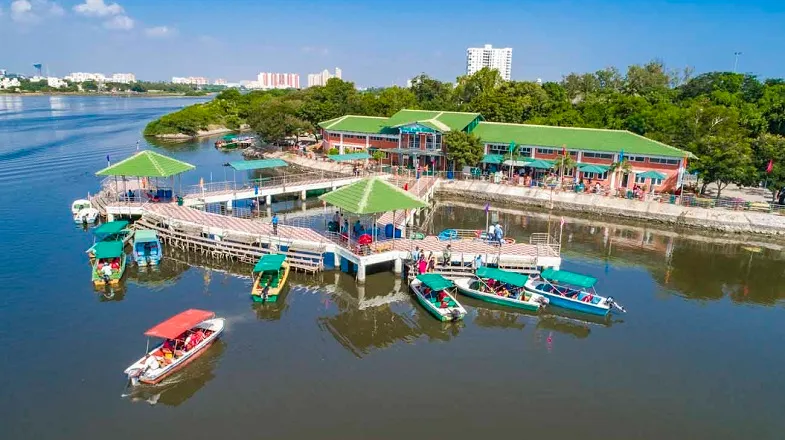
Muttukadu Lake is a popular destination for boating and water sports. Visitors can enjoy exciting activities such as speed boating, rowing, windsurfing, water skiing, and aqua scooter rides. As a result, the lake appeals to both adventure seekers and leisure travelers.
The lake is strategically located between the MGM Beach and Kovalam Beach and lies along the route to Mahabalipuram, making it an ideal stop for travelers exploring the ECR. In addition to adventure activities, Muttukadu Lake and its surrounding wetlands attract birdwatchers and wildlife photographers. Especially during the migratory season, visitors can spot several bird species, including kingfishers, herons, egrets, and occasionally flamingos. The Muttukadu Boat House operates under the Tamil Nadu Tourism Development Corporation (TTDC). The TTDC offers multiple boating packages to enhance visitor experiences, with boat rental charges ranging from ₹300 to ₹1250 per ticket or per boat, depending on the activity.
Furthermore, the boat house provides additional facilities such as a children’s amusement park, a restaurant serving snacks and meals, parking space, lockers, and restrooms. Consequently, Muttukadu Lake serves as an excellent getaway for families, friends, and couples. With its calm waters, scenic surroundings, and convenient location close to Chennai, Muttukadu Lake is an ideal destination for a relaxed day trip or picnic. It offers the perfect balance of adventure, nature, and tranquility away from the city’s hustle.
Image Attribution : ttdconline.com
Nearby Tourist Attractions
Chennai District Public Library, popularly known as the Connemara Public Library, ranks among the oldest and most prestigious libraries in Chennai. Located in Egmore, this historic institution plays a vital role in the city’s educational and intellectual landscape.
National & International Importance
Importantly, the library functions as a United Nations Depository Library, making it one of only four National Depository Libraries in India. As a result, it receives copies of all books published in India, along with newspapers, journals, and periodicals. Therefore, researchers and scholars widely regard it as a treasure house of knowledge.
Collections & Facilities
In 1973, authorities added a new building to accommodate its expanding collections. Today, visitors can explore ancient books, well-equipped reference sections, and a dedicated IAS study centre. Consequently, the library attracts students, civil service aspirants, and academics alike.
Associated Libraries & Online Access
Moreover, the Connemara Public Library network also includes the Central Library of IIT Madras, the Corporation Library at Royapettah, and another government library in Triplicane. All these libraries connect through a common official website, allowing users to check book availability and library services online.
Official Website
Visitors can access detailed information through the official portal of the Chennai District Public Library (Connemara Public Library Chennai).
Why Visit This Library?
Overall, Chennai District Public Library stands as a pillar of learning, history, and public knowledge, making it a must-visit destination for readers and researchers in Chennai.
How to Reach Chennai Public Library
- By Road: Makkah Masjid is easily accessible from all parts of Chennai via Mount Road (Anna Salai) using buses, autos, taxis, or private vehicles.
- By Train: The nearest major railway station is Chennai Central Railway Station, from where you can reach the mosque by road in a short time.
- By Air: The closest airport is Chennai International Airport; from there, Mount Road is easily reachable by taxi or bus.
Nearby Tourist Attractions
- Madras Crocodile Bank Trust – Chennai
- Muttukadu Lake Boat House – Chennai
- Anna Centenary Library – Chennai
- Jeevan Park – Chennai
- Nageshwara Rao Park – Chennai
- Thousand Lights Mosque Anna Saalai – Chennai
- Arignar Anna Zoological Park – Chennai
- Casa Veronas Mosque – Chennai
- Mahabalipuram Shore Temple – Chennai
Anna Centenary Library, popularly known as ACL, stands as one of the most prominent knowledge centres in Chennai. Established by the Government of Tamil Nadu, the library reflects the state’s strong commitment to education, learning, and public access to information.
Location & Architectural Scale
Located in Kotturpuram, Chennai, Anna Centenary Library spreads across an impressive 8 acres and rises over nine well-planned floors. Moreover, the library welcomes nearly 2,700 visitors every day, highlighting its importance among students, researchers, and book lovers. At any given time, the facility can comfortably accommodate around 1,250 readers.
Vast Collection & Reading Facilities
Most importantly, the library houses space for nearly 1.2 million books, covering diverse subjects, languages, and research materials. In addition, it offers an extensive collection of journals, reference materials, and Braille books, ensuring inclusive access for all readers.
Dedicated Children’s Section
Furthermore, a 15,000 sq. ft. children’s section makes reading enjoyable for young minds. This area features storybooks, multimedia kits, and interactive resources designed to nurture curiosity and creativity.
Ideal Place for Book Lovers
Therefore, whether you are a student, researcher, or passionate reader, Anna Centenary Library serves as an ideal destination for knowledge, study, and inspiration.
Nearby Tourist Attractions
- Madras Crocodile Bank Trust – Chennai
- Muttukadu Lake Boat House – Chennai
- Public Library – Chennai
- Jeevan Park – Chennai
- Nageshwara Rao Park – Chennai
- Thousand Lights Mosque Anna Saalai – Chennai
- Arignar Anna Zoological Park – Chennai
- Casa Veronas Mosque – Chennai
- Mahabalipuram Shore Temple – Chennai