
Pillayarpatti Karpaga Vinayagar Temple
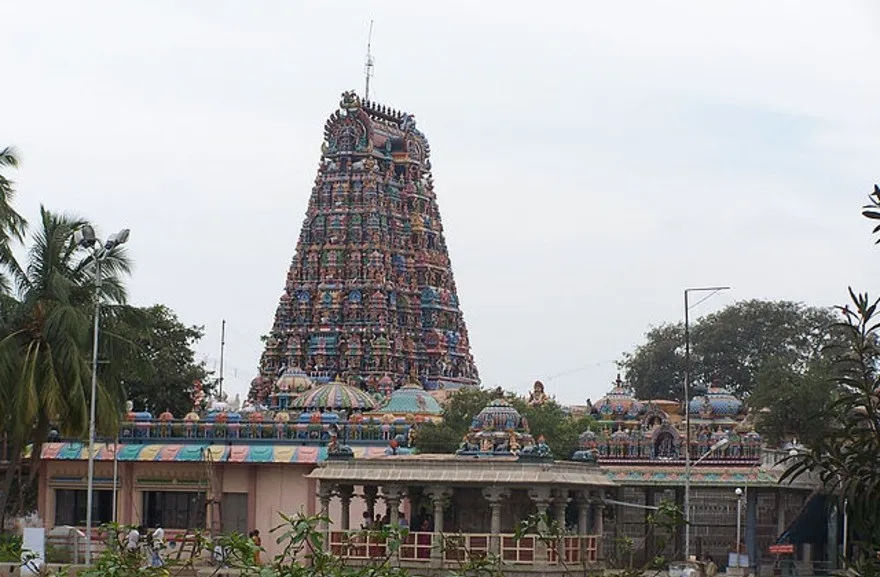
Overview
Karpaga Vinayagar, also known as Pillaiyarpatti Pillaiyar Temple, is located at Pillaiyarpatti in Sivagangai District. This temple is an ancient rock-cut cave shrine dedicated to Karpaga Vinayagar (Lord Ganesha). Moreover, the Chettiyar or Nagarathar community maintains the temple through an NGO Trust, thereby preserving its heritage and traditions.
Pillayarpatti Karpaga Vinayagar Temple – Etymology
Lord Ganesha presides in the temple with two arms and a twirling trunk in Valampuri posture; therefore, devotees refer to him as Valampuri Vinayagar. According to Hindu mythology, the Karpaga Tree (Kalpavriksha) is a divine wish-fulfilling tree. Likewise, devotees believe that Lord Ganesha fulfills the wishes of his devotees, and hence he is also known as Karpaga Vinayagar.
Architecture of Pillayarpatti Karpaga Vinayagar Temple
Pillaiyarpatti Temple is a cave formation that dates back to the era of the early Pandyas. In fact, stone inscriptions found in the temple indicate that it dates between the years 1091 and 1238 B.C. Furthermore, the sculptor Ekkatur Koon Peruparanam carved the images of Lord Ganesha and Lord Shiva directly out of stone, showcasing remarkable craftsmanship.
In addition to these deities, the temple houses shrines dedicated to several other Gods. Interestingly, the sanctum sanctorum (Vinayagar Sannidhi) does not provide a path for Parikrama or circumambulation. The presiding deity, Karpaga Vinayagar, stands 6 feet tall with the trunk curling toward the right, symbolizing the Valampuri form. Besides this, the temple also enshrines Goddess Karthiyayini, Nagalingam, and Lord Pasupatheeswarar.
Temple Timings in Pillayarpatti Karpaga Vinayagar
The temple remains open from 6:00 AM to 1:00 PM and again from 4:00 PM to 8:30 PM, thereby allowing devotees ample time for darshan.
Karpaga Vinayagar Pooja Timings
| Name of the Pooja | Pooja Timing |
|---|---|
| Thiruvanandal Abhishekam | 6:00 AM to 6:30 AM |
| Kalasandhi | 8:30 AM to 9:30 AM |
| Uchikalam | 11:30 AM to 12:00 PM |
| Saayaratchai | 5:00 PM to 6:30 PM |
| Artha Jama Pooja | 7:45 PM to 8:30 PM |
Festivals of Pillayarpatti Karpaga Vinayagar Temple
Vinayagar Chaturthi, celebrated in the Tamil month of Aavani (August–September), is the major festival observed at the temple. During this time, the festival extends for 10 days, and consequently, the temple attracts a large number of devotees who gather to seek blessings.
How to reach Pillayarpatti Karpaga Vinayagar Temple
Pillaiyarpatti lies at a distance of around 73 kilometres from Madurai and about 16 kilometres from Karaikudi. The nearest railway station is Karaikudi, located approximately 18 kilometres away. Additionally, the nearest airports are at Madurai (around 94 kilometres away) and Trichy (around 89 kilometres away), making the temple easily accessible by road, rail, and air.
Epilogue
Overall, Pillaiyarpatti Vinayagar Temple stands as one of the oldest cave temples in Tamil Nadu. Moreover, the Agamic texts (collections of Vedic and non-Vedic scriptures) found in the temple not only help scholars date the shrine but also reflect the rich cultural heritage of Tamil Nadu that has been preserved through centuries.
Pillayarpatti Karpaga Vinayagar Temple – FAQ
Where is Pillayarpatti Karpaga Vinayagar Temple located?
Pillayarpatti Karpaga Vinayagar Temple is located in Pillayarpatti village near Karaikudi in Sivaganga district, Tamil Nadu. It is one of the most famous Ganesha temples in the state.
What is special about Karpaga Vinayagar?
The temple houses a 6-foot tall rock-cut idol of Lord Ganesha carved inside a cave shrine. The deity is believed to be over 1,600 years old.
Why is the temple historically important?
The temple dates back to the 4th–7th centuries and features Tamil-Brahmi inscriptions, showcasing early Pandya-era rock-cut architecture.
Which festival is celebrated grandly here?
Vinayaka Chaturthi is celebrated with great devotion, attracting thousands of devotees from across Tamil Nadu.
What are the temple timings?
The temple is generally open from early morning to night, with regular poojas and special rituals conducted on auspicious days.