
Explore the Sacred Ramanathaswamy Temple at Rameswaram
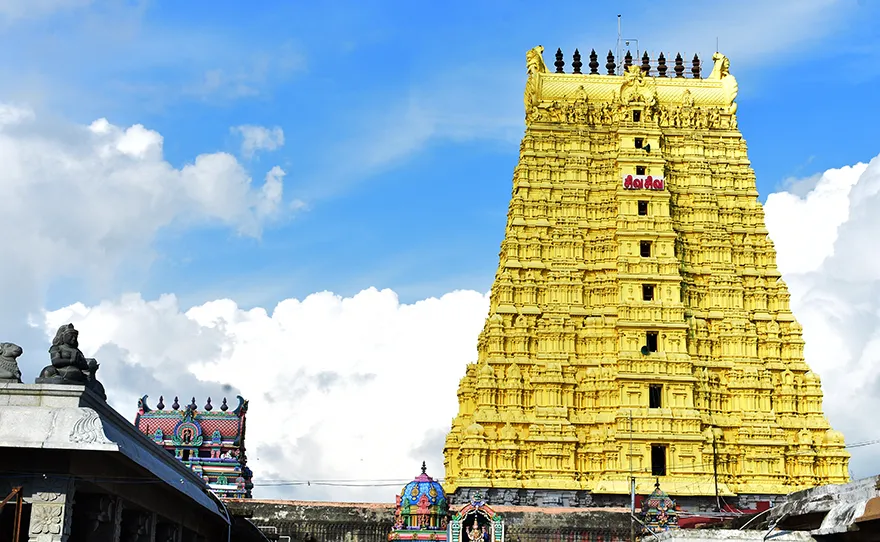
Overview of Ramanathaswamy Temple, Rameswaram
The Ramanathaswamy Temple is a revered Hindu shrine dedicated to Lord Shiva and is located on Rameswaram Island in the Ramanathapuram district of Tamil Nadu. Built in the traditional Dravidian style of architecture, the temple stands as one of the most sacred pilgrimage destinations for Hindus across India.
Moreover, the temple holds immense spiritual importance as it forms an integral part of major Shaivite and pan-Indian pilgrimage traditions.
The Legend Behind Ramanathaswamy Temple
Lord Shiva, worshipped here as Ramanathaswamy in the form of a Lingam, is believed to have been installed and worshipped by Lord Rama himself. According to the epic Ramayana, Lord Rama sought absolution for the sins committed during his battle against Ravana, the demon king of Lanka.
Consequently, Lord Rama instructed his devotee Hanuman to bring a sacred lingam from the Himalayas. However, when Hanuman was delayed, Goddess Sita fashioned a lingam out of sand on the shores of Rameswaram. This sand lingam, known as Ramalingam, remains the principal deity in the sanctum even today.
Architecture of Ramanathaswamy Temple
The gradual transformation of the temple from a humble thatched structure into its present magnificent form is largely attributed to the Sethupathi rulers of Ramanathapuram. Their patronage shaped the temple into a grand architectural marvel.
Inside the sanctum, the temple uniquely houses two lingams—Ramalingam, crafted by Sita, and Vishwalingam, brought by Hanuman from Mount Kailash. As instructed by Lord Rama, devotees continue to worship Vishwalingam first.
Furthermore, the temple features towering compound walls on all four sides, with majestic gopurams to the east and west and completed gateways to the north and south. The temple’s most striking feature is its long corridors. In fact, the outer corridor, supported by 1,212 intricately carved pillars, is regarded as the longest temple corridor in the world. The imposing Rajagopuram rises to a height of 53 metres.
Additionally, the temple complex includes several notable halls such as the Anuppu Mandapam, Sukravara Mandapam, Sethupathi Mandapam, Kalyana Mandapam, and Nandi Mandapam. Separate shrines for Ramanathaswamy and Goddess Parvathavardhini lie opposite each other, connected by a corridor. Shrines dedicated to Goddess Vishalakshi, Subramanya, Nataraja, Hanuman, Lord Vishnu, and Lord Ganesha further enhance the spiritual richness of the temple.
Interesting Facts About Ramanathaswamy Temple
- The Ramanathaswamy Temple is one of the twelve Jyotirlinga shrines and also one of the 274 Paadal Petra Sthalams glorified by the Shaivite saints Appar, Sundarar, and Tirugnana Sambandar.
- It forms an essential part of the sacred Char Dham pilgrimage, along with Badrinath, Puri, and Dwaraka.
- The temple corridor spans approximately 197 metres from east to west and 133 metres from north to south, making it the longest in Asia.
- Even today, Vishwalingam is worshipped before Ramalingam, following Lord Rama’s instruction.
- The Maratha rulers of Thanjavur established rest houses in Rameswaram and donated them to support pilgrims.
- Devotees believe that a pilgrimage to both Varanasi and Rameswaram completes a Hindu’s spiritual journey toward salvation.
The Sacred 22 Holy Theerthams
Rameswaram is home to sixty-four sacred Theerthams (holy water bodies), each carrying spiritual significance. Among them, Agni Theertham along the seashore holds primary importance. Notably, twenty-two of these Theerthams are located within the Ramanathaswamy Temple complex.
Devotees believe that bathing in these twenty-two Theerthams equals performing intense penance. Therefore, ritual bathing forms a vital part of the Rameswaram pilgrimage, with each Theertham symbolizing a unique spiritual benefit.
Temple Timings: The temple remains open daily from 5:00 AM to 1:00 PM and again from 3:00 PM to 9:00 PM.
The Rituals and Pujas at Rameshwaram Temple
| Pooja details of Rameshwaram Temple | Timings |
|---|---|
| Palliyarai Deepa Aradhana | 5:00 AM |
| Spadigalinga Deepa Aradhana | 5:10 AM |
| Thiruvananthal Deepa Aradhana | 5:45 AM |
| Vila Pooja | 7:00 AM |
| Kalasanthi Pooja | 10:00 AM |
| Uchikala Pooja | 12 Noon |
| Sayaratchai Pooja | 6:00 PM |
| Arthajama Pooja | 8:30 PM |
| Pilliyarai Pooja | 8:45 PM |
Ramanathaswamy Temple Festivals
The prominent festivals observed in the temple are:
- Maha Sivarathri – 10 days festival during the Tamil month of Maasi (February-March)
- Vasanthotsavam – 10 days festival during the Tamil month of Vaikasi (May-June)
- Ramalinga Prathishtai – 3 days festival during the Tamil month of Aani (June-July)
- Thirukalyanam – 17 days festival during the Tamil month of Aadi (July-August)
- Navarathri – 10 days festival during the Tamil month of Purattasi (September-October)
- Kantha Sashti – 6 days festival during the Tamil month of Aippasi (October-November)
- Aarudhra Darshanam – 10 days festival during the Tamil month of Margazhi (December-January)
How to reach Rameswaram
Rameswaram is well connected by road and rail with Chennai, Madurai, Coimbatore, Trichy and other important cities. The 2.3 kilometres long Indira Gandhi Road Bridge (popularly called Pamban Bridge) connects Mandapam (a place on Indian mainland) with Pamban (fisherman town in Rameswaram). The city bus stand is at a distance of around 2 kilometres from Ramanathaswamy Temple. Rameswaram has a railway station, about 1.3 kilometres from the temple. The nearest airport is at Madurai, 163 kilometres from Rameswaram.
Epilogue
Ramanathaswamy Temple is a holy paradise for devotees and an ideal delight for tourists. With its architectural grandeur, imposing temple tower, magnificent long corridors, aesthetically carved pillars and holy water bodies purifying mind and soul, the temple attracts millions of pilgrims every year.
Tips for Visiting Rameswaram Ramanathaswamy Temple
Temple Rituals:
- Holy Bath: Take a dip in the sacred waters of the 22 holy theerthams, believed to purify the soul.
- Main Darshan: Seek the blessings of Lord Ramanatha Swamy at the main shrine.
- Pujas and Offerings: Participate in various pujas and offer prayers.
Temple Etiquette:
- Respectful Behavior: Maintain silence and a respectful demeanor within the temple premises.
- Photography Restrictions: Mobile phone is strictly not allowed inside the temple.
- Queue Discipline: Follow the queue system and wait patiently for your turn.
Exploring the Complex:
- Holy Wells: Visit the 22 holy wells, each with its own significance.
- Ramanathaswamy Temple: Admire the magnificent architecture and intricate carvings.
- Other Temples: Explore nearby temples like the Hanuman Temple and the Kothandarama Swamy Temple.
Local Cuisine:
- Vegetarian Options: Enjoy vegetarian dishes influenced by South Indian cuisine.
- Seafood Delights: Indulge in fresh seafood delicacies.
By following these tips, you can make the most of your pilgrimage to Ramanathaswamy Temple and immerse yourself in its spiritual significance.
Ramanathaswamy Temple, Rameswaram – FAQ
Why is Ramanathaswamy Temple famous?
Ramanathaswamy Temple is famous as one of the 12 Jyotirlinga temples of Lord Shiva and for having the longest temple corridor in India, measuring about 1,200 meters.
Where is Ramanathaswamy Temple located?
The temple is located in Rameswaram on Pamban Island in Ramanathapuram district, Tamil Nadu.
What is the significance of the 22 Theerthams?
The temple has 22 sacred wells (Theerthams) within its premises. Devotees take ritual baths in these wells before darshan, as each is believed to have unique spiritual benefits.
What is the connection between Ramanathaswamy Temple and the Ramayana?
According to legend, Lord Rama worshipped Lord Shiva here to absolve sins after defeating Ravana, establishing the sacred Shiva Lingam at this site.
What is the best time to visit Ramanathaswamy Temple?
The best time to visit is from October to March when the weather is pleasant for pilgrimage and temple visits.
Tourist Attractions near Rameswaram:
- Agni Theertham Beach
- Dhanushkodi
- APJ Abdul Kalam Memorial – Rameswaram
- Kunthukal Beach
- Pamban Bridge