
Pudukkottai District
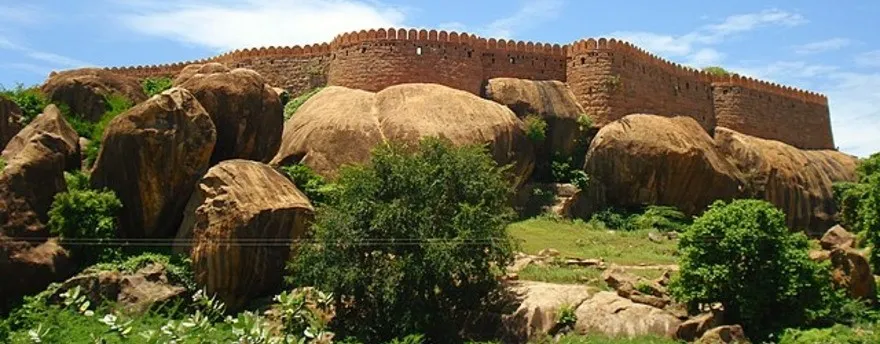
Pudukkottai District is one of the culturally rich and historically important districts of Tamil Nadu. The region preserves a remarkable heritage through its palaces, ancient temples, cave shrines, and historic monuments. The Government of Tamil Nadu officially formed Pudukkottai District on 14th January 1974. It was created by reorganizing the former Pudukkottai Division of Tiruchirappalli district and adding selected regions from Thanjavur district.
Geographically, Pudukkottai shares its eastern and northeastern boundaries with Thanjavur District. Tiruchirappalli District lies to the west and northwest. In addition, Ramanathapuram and Sivagangai districts border it on the southwest. Notably, many villages in the district have ancient origins. These villages also find mention in Tamil Sangam literature. Pudukkottai city serves as the administrative headquarters.
History of Pudukkottai District
The history of Pudukkottai reflects the deep-rooted legacy of South India. Over the centuries, the region evolved as an important centre of culture, religion, and governance.
- Archaeological findings in and around Pudukkottai reveal early human settlements. They also include some of the oldest stone inscriptions in southern India.
- Over time, powerful dynasties such as the Pandyas, Cholas, Pallavas, Hoysalas, Vijayanagara rulers, and Madurai Nayaks ruled this region.
- These rulers encouraged trade, strengthened community institutions, and supported skilled craftsmanship. As a result, they built temples and monuments of great artistic value.
- Jainism flourished in Pudukkottai for more than a thousand years until the 11th century. This period left behind numerous Jain caves, sculptures, and inscriptions.
- From the mid-17th century until Indian independence in 1947, the Thondaiman rulers exercised sovereign control over Pudukkottai. Later, the region became part of the Indian Union.
Tourist Attractions in Pudukkottai District
Chittannavasal Temple: Famous for its ancient Jain cave paintings, Chittannavasal Temple offers a fascinating glimpse into the artistic and spiritual traditions of early Tamil civilization.
Narthamalai Temple: Narthamalai Temple historic temple complex is known for its intricate stone carvings and inscriptions that highlight Pudukkottai’s architectural excellence.
Viralimalai Murugan Temple: Viralimalai Murugan Temple is Perched on a hill, this popular temple dedicated to Lord Murugan attracts devotees from across Tamil Nadu.
Avudaiyar Temple: Dedicated to Lord Shiva, Avudaiyar Temple stands out for its unique Dravidian architecture and tranquil spiritual atmosphere.
Kudumiyanmalai Temple: This ancient hillock is renowned for its rock-cut Jain cave temples, featuring remarkable sculptures and inscriptions from early historic periods.
Kattubhava Pallivasal: Built during the 17th century by the Arcot Nawab, this sacred Islamic site hosts the Pagruthin Avuliya, also known as Kattubhava Samathi. The annual URS festival here attracts devotees from different faiths, reflecting the district’s cultural harmony.
Avur Church: Constructed in 1747 AD, this Roman Catholic church marks the beginning of the missionary work of Rev. Father Joseph Beschi, also known as Veeramamunivar. The church is especially known for its grand Easter celebrations and draws visitors from India and abroad.
How to reach Pudukkottai
Road – Regular buses connect major cities with Pudukottai. National Highways NH 336 (Trichy-Ramanathapuram) and NH 226 (Perambalur-Manamadurai) pass through Pudukottai. State Highways SH 26 and 71 also pass through the town of Pudukottai.
Rail – Pudukottai Railway Station has daily express trains to and from Rameswaram and Chennai and weekly express trains to Coimbatore, Kanyakumari, Puducherry, Varanasi and Bhubaneshwar.
Air – The nearest airports are Tiruchirappalli International Airport (45 kilometres from the town) and Madurai Airport (122 kilometres away from the town).
To explore more about Pudukottai Tourism, Please click and check Pudukkottai Tourism page.
Image Attribution: Rajaraman Sundaram